Quick answer
To choose a diamond, set your budget first, then let cut lead: a well-cut stone returns more light than a better-graded stone with weaker proportions. After cut, trade color, clarity and carat weight against each other until the stone looks right to you and fits the setting. Then confirm in writing whether it is natural or lab-grown and exactly what quality information, or grading report, comes with it.
Choosing a diamond is one of the few purchases where most people are asked to make an expensive decision in an unfamiliar language. Cut, color, clarity, carat, certificates, fluorescence: it arrives all at once. It does not have to work that way.
This guide explains what the grading terms mean in plain English and which trade-offs matter most. The aim is not to talk you into a particular diamond; it is to make sure you understand exactly what you are choosing and why.
How much should you spend on a diamond?
Decide what you want to spend before you start looking, not after you have fallen for something. A clear number is the single most useful tool you can bring to the process, because every decision that follows is a trade-off within it.
Ignore the old formulas about spending a set number of months’ salary. Those figures originated in advertising, not in any financial or gemological principle. A sensible budget is one that leaves your savings and your plans intact. Remember to leave room for the setting, insurance and any later maintenance, which are easy to forget when your attention is on the stone.
What are the 4Cs of a diamond?
Diamonds are described using four characteristics (cut, color, clarity and carat weight) known collectively as the 4Cs. The framework was developed by the Gemological Institute of America (GIA) so that any diamond could be described consistently anywhere in the world, rather than through a seller’s own vocabulary.
That standardization is the point. When two stones are described in the same terms, you can compare them meaningfully. Below is what each characteristic actually measures.
| Characteristic | What it measures | Scale (GIA) | Practical priority |
|---|---|---|---|
| Cut | How proportions, symmetry and polish return light | Excellent to Poor (standard round brilliants) | Highest: the grade you see from across a room |
| Color | How little body color the stone has | D (colorless) to Z (light yellow or brown) | Adjacent grades are hard to tell apart once set |
| Clarity | Size, number and position of inclusions and blemishes | Flawless to Included (I1, I2, I3) | Aim for nothing visible to the unaided eye |
| Carat | Weight, not size: 1 carat = 0.2 g | Measured to the hundredth of a carat | Prices step up at round-number weights |
Cut: how well does the diamond handle light?
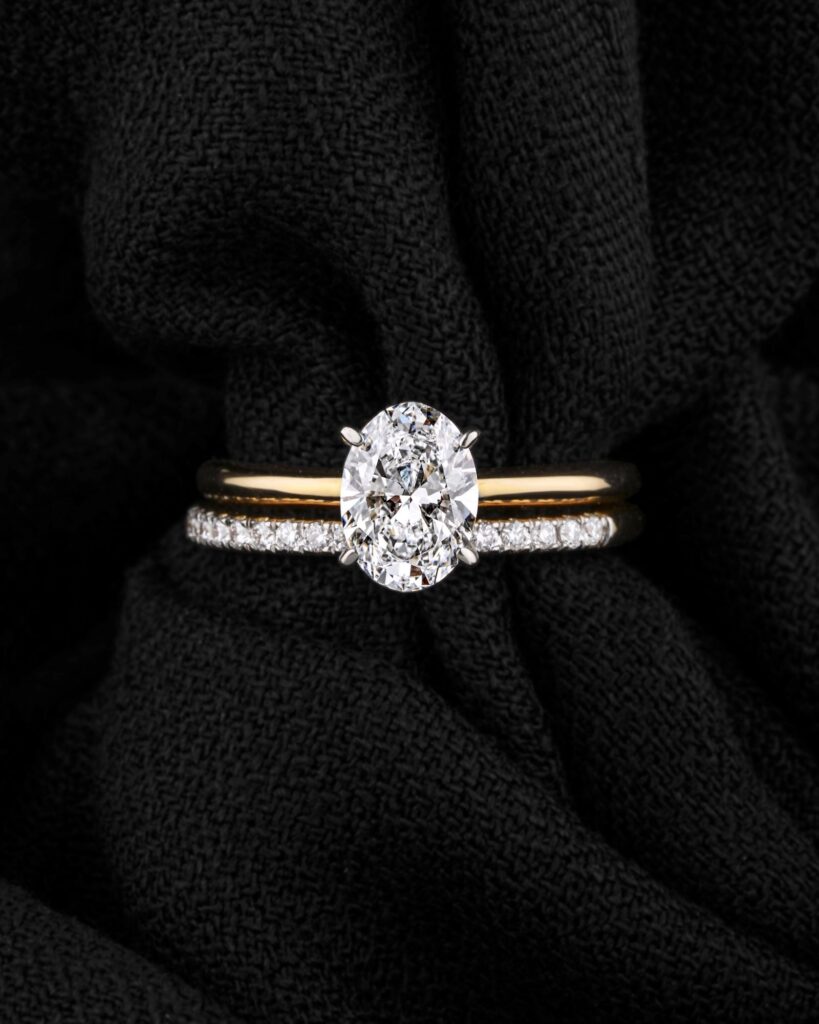
Cut is not the shape of the diamond. It describes how well the stone’s proportions, symmetry and polish work together to return light to your eye, what the trade calls brilliance and fire.
Of the four characteristics, cut is the one most directly responsible for whether a diamond looks alive. A stone cut too shallow or too deep leaks light through the bottom instead of reflecting it back, and it will look dull no matter how good its other grades are. GIA assigns standard round brilliant diamonds a cut grade ranging from Excellent to Poor.
Color: how white does the diamond need to be?
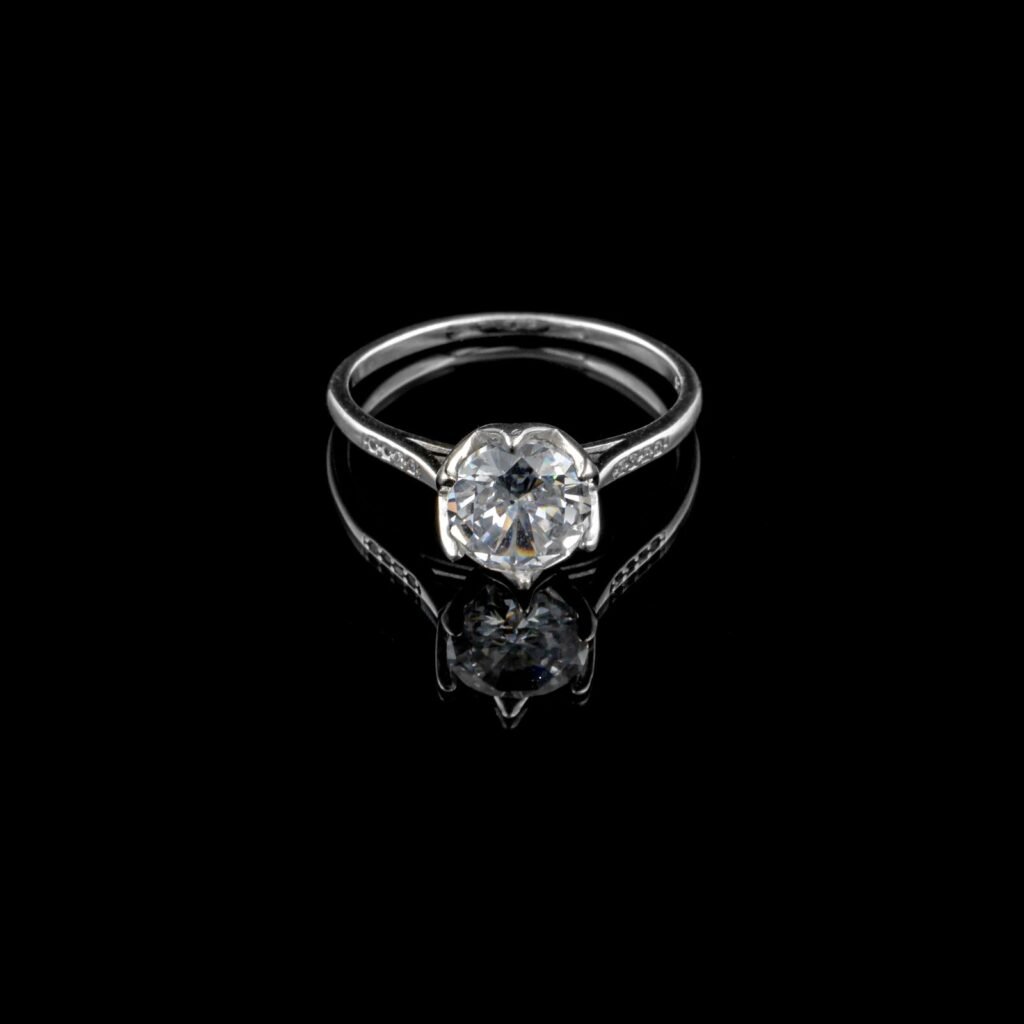
For diamonds in the normal color range, the color grade measures how little color a stone has. GIA’s scale runs from D, which is colorless, through to Z, where a light yellow or brown tint becomes noticeable.
The distinctions between neighboring grades are subtle, and were designed to be assessed under controlled laboratory lighting against master stones. In a ring, on a hand, in ordinary daylight, differences that look significant on paper are often very hard to see.
The metal you choose matters here too. A warmer stone can sit very comfortably in yellow or rose gold, where a cooler white setting would draw attention to the same tint.
Clarity: do inclusions matter?
Nearly all diamonds contain small internal features, called inclusions, and surface irregularities, called blemishes. Clarity grading assesses how many there are, how large, where they sit and how noticeable they are under ten-power magnification.
GIA’s clarity scale runs from Flawless at one end to Included at the other. In the Included range (I1 to I3), GIA describes inclusions as obvious under 10x magnification and able to affect transparency and brilliance. The practical question is not whether a diamond has inclusions, since most do, but whether you can see them without a loupe and whether any sit somewhere that affects durability.
Many buyers find the best value in stones whose inclusions are genuinely invisible to the unaided eye rather than in the highest grades available.
Carat weight: is bigger always better?
Carat is a measure of weight, not of size, and one metric carat equals 0.2 grams. Two diamonds of identical carat weight can look noticeably different depending on how they are cut, because proportions determine how much of that weight sits in the visible face of the stone rather than hidden in its depth.
Prices tend to step up sharply at the round-number weights that buyers ask for most often. A stone slightly below one of those thresholds can look essentially the same across the table but cost meaningfully less. For pieces set with many small stones, the figure quoted is usually total carat weight (ctw), the combined weight of every diamond in the piece, not the size of any one of them.
How do the 4Cs work together?
No single grade tells you whether a diamond is beautiful. The 4Cs interact, and a stone that reads well on paper can disappoint in person while a more modest specification can be lovely.
A useful way to approach it is to decide which characteristic matters most to you and let the others flex around it. If you want maximum sparkle, protect the cut grade first. If you want visible presence, favor carat weight and accept a color or clarity grade a step lower. If you want a stone that reads bright white against platinum or white gold, put color higher up your list. Our guide to platinum vs white gold covers how those two metals differ.
Buying online, you judge a stone from its listed specification and photographs. Read the full product details, look at every image, and ask before ordering if anything is unclear.
Do you need a diamond grading report?
A grading report is an assessment of a specific diamond carried out by a gemological laboratory. It is not an appraisal and it is not a valuation: it describes the stone’s characteristics, not what it is worth.
For a significant center stone, a report from an independent laboratory is what turns a seller’s description into something verifiable. GIA reports document a diamond’s characteristics and measurements, and many graded stones carry a laser inscription of the report number on the girdle, allowing the individual diamond to be matched back to its paperwork. Read the report yourself rather than relying on a summary of it, and check that the report number and the stone correspond.
Most finished jewelry, however, is not sold with an individual report for each stone. Set diamonds are usually described by a quality range, for example “G-H, SI”, rather than graded one by one. That is normal, as long as the seller says so plainly. See diamond grading reports explained for what each type of documentation tells you.
Natural or lab-grown: which diamond should you choose?
Laboratory-grown diamonds are diamonds, with essentially the same chemical, physical and optical properties as natural ones. They are not simulants such as cubic zirconia or moissanite, which merely resemble diamond.
The meaningful difference is origin. Natural diamonds formed in the earth over geological timescales; laboratory-grown diamonds are produced in controlled conditions over a far shorter period, principally by high-pressure high-temperature (HPHT) and chemical vapor deposition (CVD) methods. Both are graded using the same 4Cs vocabulary, and GIA issues a distinct report type for laboratory-grown stones. For a fuller comparison of price, grading and resale, read natural vs lab-grown diamonds.
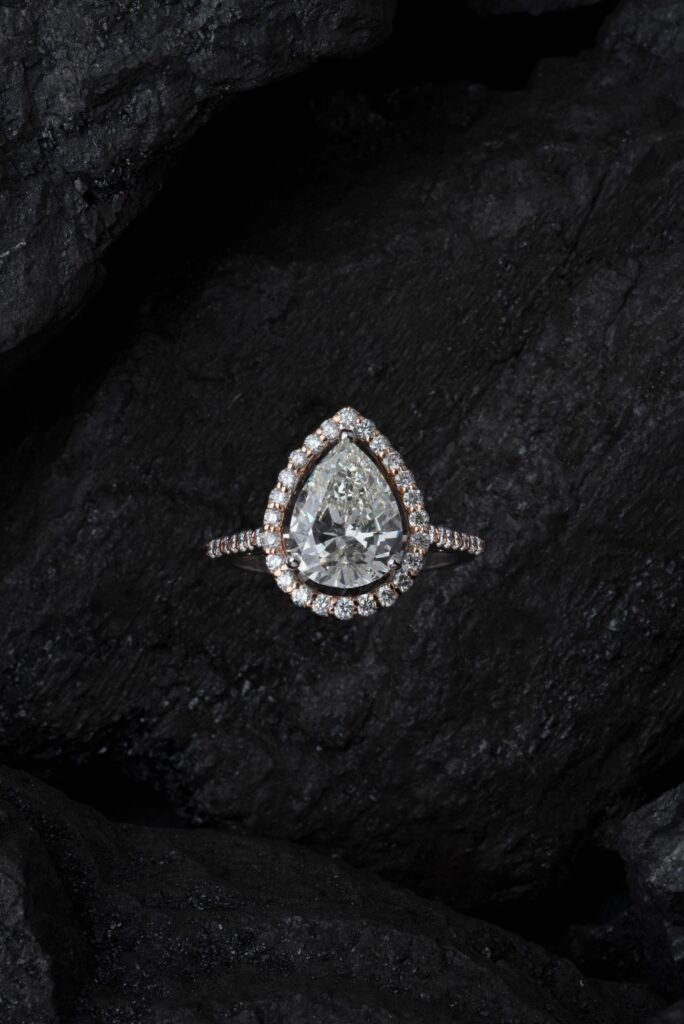
Neither is a lesser choice; they are different propositions, and they are priced differently. What matters is disclosure. In the United States, the Federal Trade Commission’s Jewelry Guides (16 CFR Part 23) address how diamonds may be described, including that a laboratory-created stone must be clearly identified as such. Any reputable seller will tell you plainly which you are looking at, in writing, without being pressed.
Which setting suits the way you live?
A setting is not only a style decision. It determines how exposed the stone is, how secure it is and how the piece behaves during an ordinary day.
Raised prong settings let light in from the sides and show a stone beautifully, but they sit higher and catch more readily on fabric. Bezel settings enclose the girdle in metal, offering more protection and a lower profile that suits hands-on work, sport or frequent glove use. Halo and pave designs add sparkle and apparent scale, with more small stones and settings to keep an eye on over time.
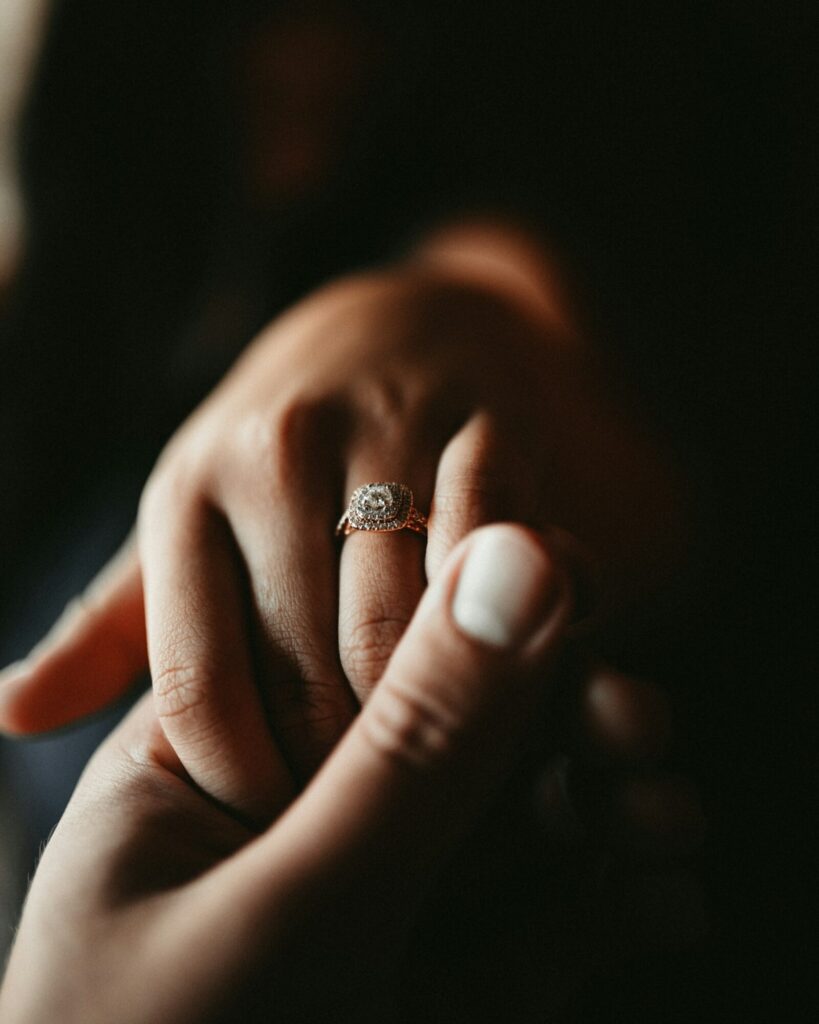
Think honestly about how the piece will be worn. A ring intended for daily wear for decades deserves a different answer from one worn occasionally. If the diamond is for a proposal, how to choose an engagement ring sets out the order in which to make each decision.
How durable is a diamond, and how do you care for it?
Diamond is the hardest known natural material, ranking 10 on the Mohs scale of scratch hardness. Hardness is not the same as toughness, though. A diamond resists scratching extremely well, but a sharp knock at the wrong angle can still chip it, and the metal holding it is far softer than the stone itself.
In practice, that means taking a ring off for heavy or abrasive work, storing pieces so that diamonds cannot rub against softer stones and metals, and having settings and prongs checked periodically by a jeweler. Diamonds attract grease, which dulls their brightness quickly; gentle regular cleaning restores far more sparkle than most people expect.
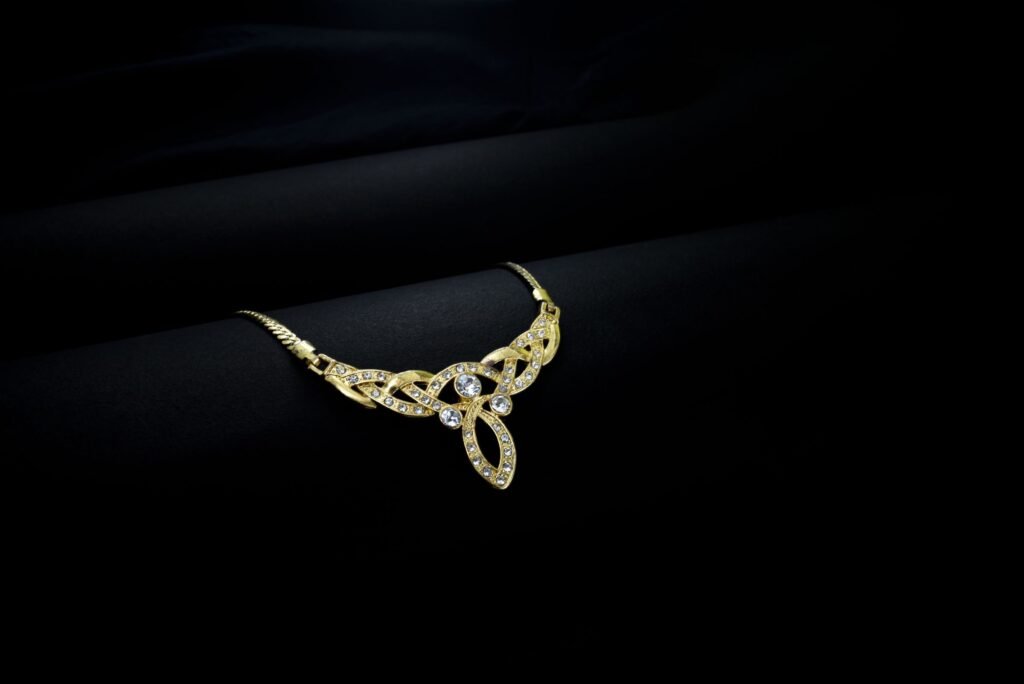
Our jewelry care guide sets out practical cleaning and storage routines in more detail.
What should you ask before you buy a diamond?
- Is this diamond natural or laboratory-grown, and is that stated in writing?
- Does it come with a grading report from a laboratory, or is its quality given as a range? May I see the full report if there is one?
- Has the diamond been treated in any way to alter its color or clarity?
- Are any inclusions visible without magnification, and do any affect durability?
- What does the return policy allow, and how long do I have?
- Can this specific design be resized, and how should the setting be maintained?
A seller who answers these plainly and puts the answers in writing is one worth buying from. Hesitation on any of them is worth noticing.
Diamonds at IMPERVORA
IMPERVORA does not currently sell loose diamonds; every diamond we offer is set in finished jewelry, and each product page states whether its stones are natural or lab-grown where that is specified. A few examples of how that information appears:
- 1 Carat Round Lab Grown IGI G/VS1 Diamond Solitaire Ring in 10K White Gold: product details list a 1.00 carat round lab-grown center stone, G color, VS1 clarity, Ideal cut, and an IGI laboratory certificate.
- 14k White Gold Cathedral Design Solitaire Diamond Engagement Ring (1 cttw): product details list a round center diamond of 0.97 carat minimum weight, I color, I1 clarity.
- Round Cut Lab Grown Diamond Eternity Ring in 14k White Gold (2 cttw FG/VS2): round lab-grown diamonds, 2 carats total weight, color and clarity given as a range (F-G, VS2).
- Platinum 1/3 CTW Natural Diamond Anniversary Band: a platinum band set with natural marquise diamonds.
- 14K Yellow Gold .05 ct. tw. Natural Diamond Micro Bezel-Set Earrings: natural diamond studs whose page states that quality grades are an assigned range and no independent grading report is included.
Unless a product page says otherwise, finished jewelry ships without an individual grading report, and set stones are described by an assigned quality range. If paperwork matters to your decision, ask us to confirm exactly what accompanies a piece before you order. Browse lab-grown diamond jewelry or natural diamond jewelry.
Frequently asked questions
Which of the 4Cs matters most?
Cut. It decides how much light the diamond returns, and a poorly cut stone looks dull regardless of its color, clarity or carat weight. After cut, balance the other three against your budget.
Is a lab-grown diamond a real diamond?
Yes. Lab-grown diamonds have essentially the same chemical, physical and optical properties as natural diamonds. The difference is origin, which must be clearly disclosed, and price.
Does IMPERVORA jewelry come with a grading report?
Only where the product page says so. Most finished jewelry ships without an individual report, and set stones are described by an assigned quality range. Ask Concierge to confirm the documentation for a specific piece before ordering.
Next step
Set your budget, decide which of the 4Cs you will protect, then compare pieces side by side in diamond jewelry. If you would like a second opinion on a specific piece, or want to confirm what documentation comes with it, contact our Concierge. We reply within one business day.
References
Gemological Institute of America (GIA): What are the 4Cs?
The 4Cs framework and what each characteristic measures.
https://www.gia.edu/FAQ/gia-faq-analysis-grading-4cs
Gemological Institute of America (GIA): Natural Diamond Grading Reports & Services
What grading reports document, and laser inscription of report numbers.
https://www.gia.edu/gem-lab-service/diamond-grading
Gemological Institute of America (GIA): Laboratory-Grown Diamond Services
How laboratory-grown diamonds are produced, graded and reported.
https://www.gia.edu/gem-lab-service/laboratory-grown-diamond
Gemological Institute of America (GIA): Diamond Care and Cleaning Guide
Cleaning, storage and everyday protection of diamond jewelry.
https://www.gia.edu/diamond-care-cleaning
Electronic Code of Federal Regulations: 16 CFR Part 23, Guides for the Jewelry, Precious Metals, and Pewter Industries
The FTC Jewelry Guides, including the lab-created disclosure in section 23.12.
https://www.ecfr.gov/current/title-16/chapter-I/subchapter-B/part-23