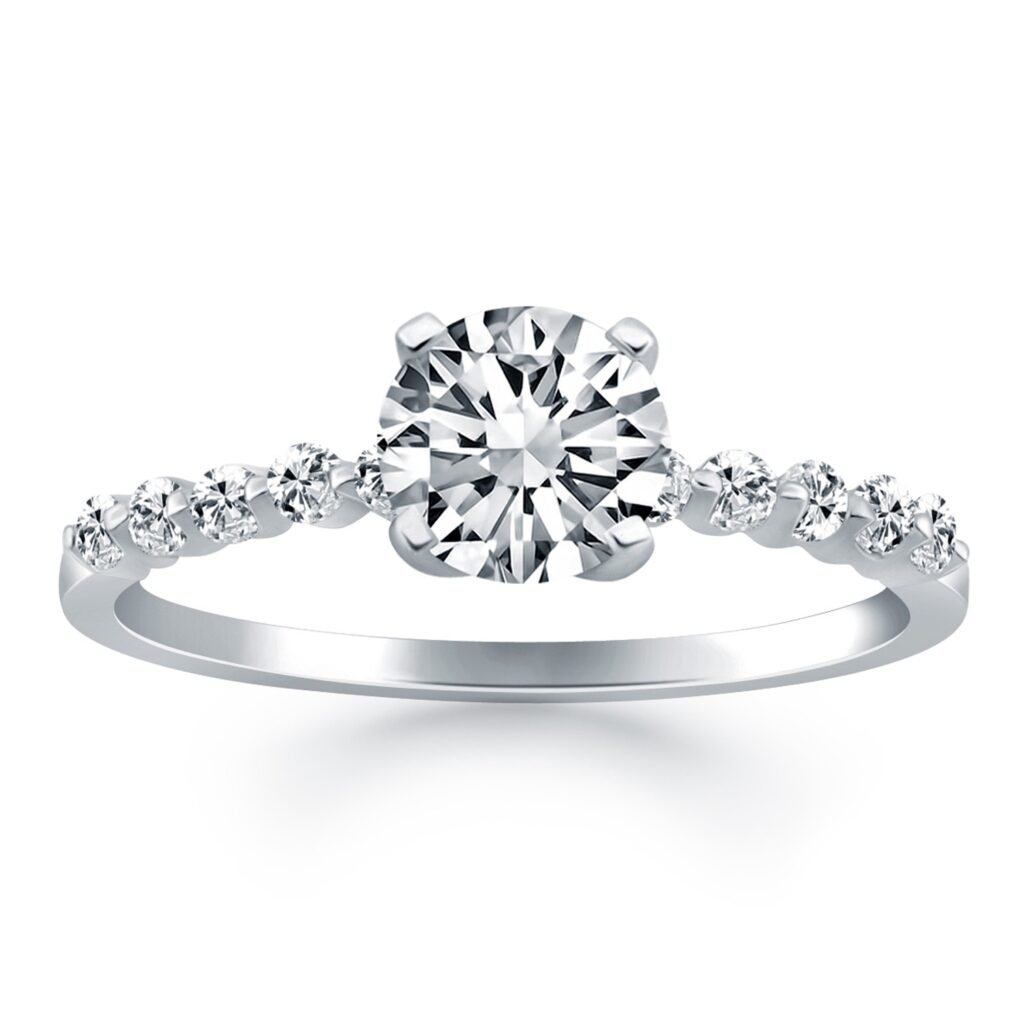
Quick answer: A lab-grown diamond is a real diamond: the same carbon crystal as a mined diamond, grown in a laboratory instead of the earth. The two can look the same to the eye and need laboratory instruments to tell apart. The practical differences are price, how the stone is valued later, and what its origin means to you, and every IMPERVORA product page states which one you are buying.
This guide sets out what is true about both, how gem laboratories separate them, what the grading and labeling rules say, and how to read the diamond details on our product pages.
Is a lab-grown diamond a real diamond?
Yes. The Gemological Institute of America (GIA) describes laboratory-grown diamonds as real diamonds with “nearly the same chemical, optical and physical properties as natural diamonds” (GIA, Simulants, Moissanite and Lab-Grown Diamonds). Both are carbon in the same crystal structure, and both sit at 10 on the Mohs hardness scale.
What a lab-grown diamond is not is a simulant. Cubic zirconia and moissanite are different materials that imitate the look of diamond. They are not diamond, and a lab-grown diamond should never be confused with them, in either direction.
How is each one made?
Natural diamonds crystallized deep in the earth under heat and pressure over geological time and were carried toward the surface in volcanic rock. Because those conditions varied, each natural stone carries its own record of how it grew.
Lab-grown diamonds are made by one of two methods. High pressure, high temperature (HPHT) recreates mantle-like conditions in a press. Chemical vapor deposition (CVD) grows diamond layer by layer on a seed plate from a carbon-rich gas. After growth, some lab-grown diamonds are also treated with heat and pressure to improve their color. The rough is then cut and polished exactly as mined rough would be.
Where our product record states the method or a post-growth treatment, the page shows it. Some of our lab-grown solitaire rings list “Lab Grown Diamond (CVD Process)”; many of our lab-grown earrings and pendants carry the disclosure “Supplier-disclosed treatment: heating and pressure”. We do not assume a method that the record does not state.
On a listing, “heating and pressure” describes a treatment applied after the diamond was grown, separate from the growth method. In a 2022 lab note, GIA explains that “Many CVD-grown diamonds are subjected to high-pressure, high-temperature (HPHT) treatment after growth to remove a brownish appearance caused by extended defects”, and that “The brown color often correlates with a faster CVD growth rate”. The same note cites an estimate that “some 80% of colorless to near-colorless CVD-grown diamonds have been subjected to post-growth treatment”. In the 10 ct CVD-grown stone the note describes, GIA confirmed the treatment with laboratory instruments: photoluminescence spectroscopy and fluorescence imaging. A treated stone is still a laboratory-grown diamond.
Where a lab-grown listing names only the growth method, such as “Lab Grown Diamond (CVD Process)”, and carries no treatment disclosure, it does not tell you whether the stone was treated afterwards. If that matters to you, ask our Concierge before you order.
How do laboratories tell natural and lab-grown diamonds apart?
Not by eye, and not with a loupe. GIA explains that the two have “vastly different growth histories” that show up in the type, distribution and concentration of tiny atomic-level defects and trace elements. Laboratories read those differences with spectroscopy and other advanced instruments, and GIA’s screening device for jewelers separates natural from laboratory-grown stones in seconds. Growth patterns visible under specialist lighting can also reveal whether a stone grew by HPHT or CVD.
Graded lab-grown diamonds are commonly laser-inscribed on the girdle with a report number and a statement that the stone is laboratory-grown. Small stones set in finished jewelry are usually not individually inscribed, which is why the seller’s written description matters.
Are they graded the same way? GIA and IGI
Cut, color, clarity and carat weight describe both kinds of diamond, and our guide to the 4Cs applies to either. How a laboratory reports a lab-grown stone, however, now differs by laboratory.
- GIA announced that from October 1, 2025 its laboratory-grown diamond reports no longer use the D-to-Z color and clarity scale created for natural diamonds. Lab-grown stones are described as “Premium” or “Standard” based on an overall assessment of color, clarity and cut (GIA announcement).
- IGI (International Gemological Institute) grades many lab-grown diamonds using familiar color and clarity grades. Some of our lab-grown solitaire rings, for example, name IGI and grades such as G color and VS1 clarity in the title and specifications.
For the full picture of what a report does and does not tell you, see diamond grading reports explained.
What do the labeling rules require?
In the United States, the Federal Trade Commission’s Jewelry Guides define a diamond as a mineral consisting essentially of pure carbon crystallized in the isometric system. Under 16 CFR 23.12, a laboratory-created diamond may be called a diamond only with a clear qualifying term such as “laboratory-grown”, “laboratory-created” or “[manufacturer name]-created”, or with a clear disclosure that it is not a mined stone. The Guides also caution against misusing words such as “real”, “genuine” and “natural”.
In practice, that means a lab-grown diamond should always carry its qualifier next to the word diamond, and “natural” should only be used for a mined stone. That is the rule we follow.
How does IMPERVORA label lab-grown and natural diamonds?
Each diamond product page carries the stone type in three places:
- The title says “Natural Diamond” or “Lab-Grown Diamond”, for example “14K Yellow Gold 1/8 ct. tw. Natural Diamond Solitaire Bezel-Set Earrings”.
- The specifications repeat the diamond type and, where the manufacturer provides it, the total carat weight, stone sizes and a quality range such as “I1, G-H” or “SI1-SI2, G-H”.
- A diamond disclosure on many pages states the type in plain words. Our lab-grown pieces read “Lab-grown diamond, not a natural or simulated stone”, with any supplier-disclosed treatment; our natural pieces read “Natural diamond. Supplier disclosure: not treated.”
On pieces that let you choose between stones, such as a birthstone charm offered with natural or lab-grown diamonds, the option name itself says which one you are selecting.
Does finished jewelry come with a grading report?
Usually not, and it is worth knowing before you buy. Diamonds set in finished jewelry are not individually graded. The quality shown is a range assigned by the manufacturer, such as “VS, F+” or “I1, G-H”, and our disclosure says so in plain words: “Quality grades are the supplier’s assigned range; no independent grading report is included.”
A grading report applies only where the product page explicitly names one. If a report matters to your decision, ask our Concierge to confirm the details for that specific piece before you order. Loose diamonds are not currently sold.
How do price and resale compare?
Lab-grown diamonds generally sell for considerably less than natural diamonds of similar size and quality. At a fixed budget, that usually means a larger stone, a higher quality range, or both. The reason is supply: natural production is limited by geology, while lab-grown production is limited by manufacturing capacity, which has expanded.
The honest caveat is resale. Lab-grown diamonds have little established secondhand market, and because production keeps growing, a comparable lab-grown stone may cost less in future. Natural diamonds have a more established resale market, but jewelry bought at retail rarely resells for what was paid in either case. We do not quote resale percentages, because they vary widely and are not ours to predict. If the piece is for wearing, this matters little; if you are buying with future value in mind, it should weigh heavily.
| Natural diamond | Lab-grown diamond | |
|---|---|---|
| Material | Carbon, isometric crystal | Carbon, isometric crystal |
| Hardness (Mohs) | 10 | 10 |
| Origin | Formed in the earth, mined | Grown by HPHT or CVD |
| Told apart by | Laboratory instruments | Laboratory instruments |
| Typical price at similar size and quality | Higher | Lower |
| Secondhand market | More established | Limited |
| Required US qualifier | None; “natural” may be used accurately | “Laboratory-grown” or similar, next to “diamond” |
At IMPERVORA
- 14K Yellow Gold 1/8 ct. tw. Natural Diamond Solitaire Bezel-Set Earrings: two marquise natural diamonds in bezel settings; quality range I1, G-H; supplier disclosure: not treated.
- 14K White Gold 1/8 ct. tw. Lab-Grown Diamond Stud Earrings: two round lab-grown diamonds in rhodium-plated 14K white gold; quality range SI1-SI2, G-H.
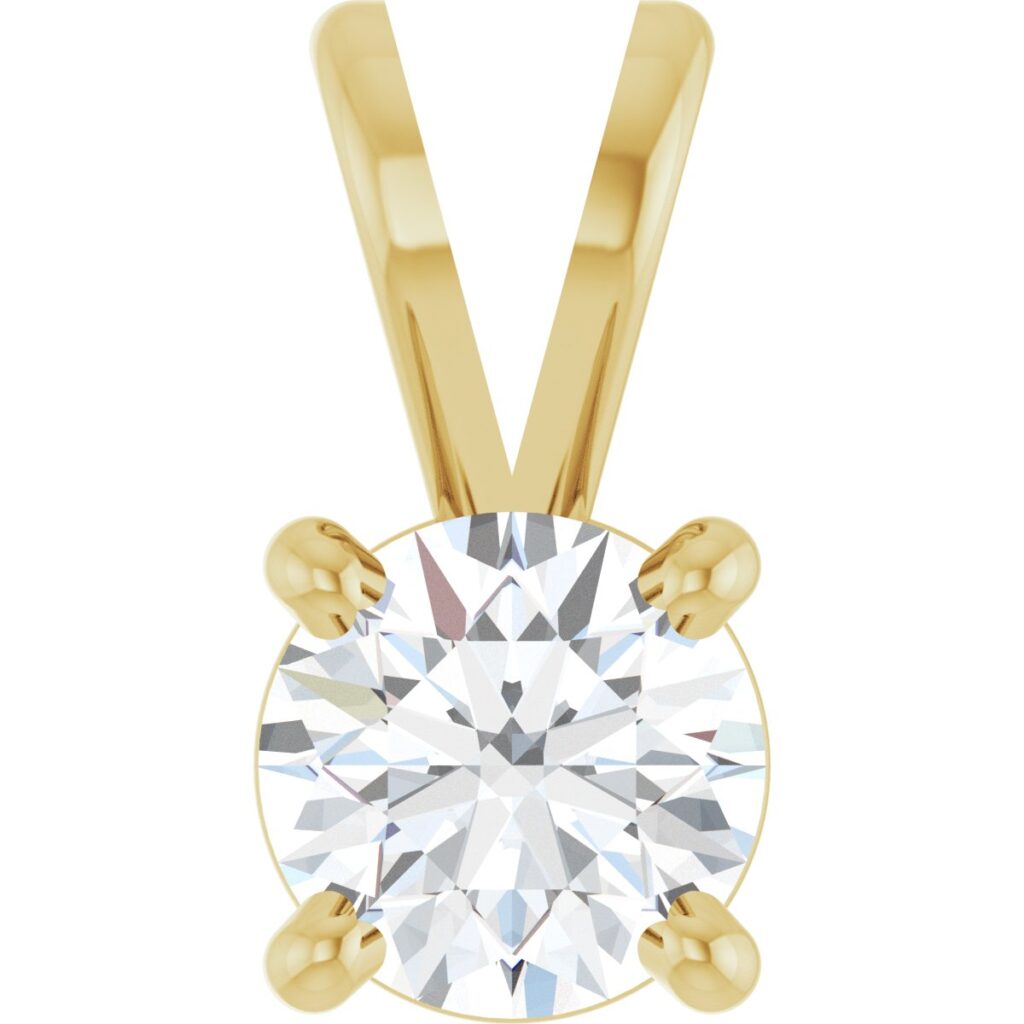
- 14K Yellow Gold 1/2 ct. Lab-Grown Diamond Pendant: one round lab-grown diamond, about 5.2 mm, in a 4-prong setting; quality range VS, F+; chain not included.
To compare at similar budgets, browse the lab-grown diamond collection alongside our natural diamond pieces.
Frequently asked questions
Can a jeweler tell a lab-grown diamond from a natural one by looking at it?
No. The two can look the same to the eye and under a loupe. Separating them reliably takes laboratory instruments such as spectroscopy, or a screening device made for the purpose.
Do lab-grown diamonds change color or get cloudy over time?
A lab-grown diamond is diamond, with the same hardness as a natural one. Like any diamond it can look dull when dirty and sparkles again once cleaned.
Does my IMPERVORA diamond jewelry come with a certificate?
Only where the product page explicitly names a grading report. Set stones in finished jewelry carry a supplier-assigned quality range, and our disclosure states when no independent report is included.
Which should I choose?
Choose lab-grown if you want the most diamond for your budget and the piece is for wearing. Choose natural if a stone formed in the earth matters to you or you care about future value. Neither choice is more correct.
Next step
Start with the lab-grown diamond collection or the natural diamond collection, and check the diamond disclosure on each page. If you want help comparing two pieces, contact our Concierge; we reply within one business day.
Shopping for an engagement ring or band? Our bridal and anniversary jewelry page labels every stone as lab-grown or natural exactly as the listing states.